Home › Costs and guides › Sump pump upkeep, season by season
GuideSump pump upkeep, season by season
Pumps fail when you need them most, during the heaviest rain. A few minutes of checking a few times a year catches most problems early.
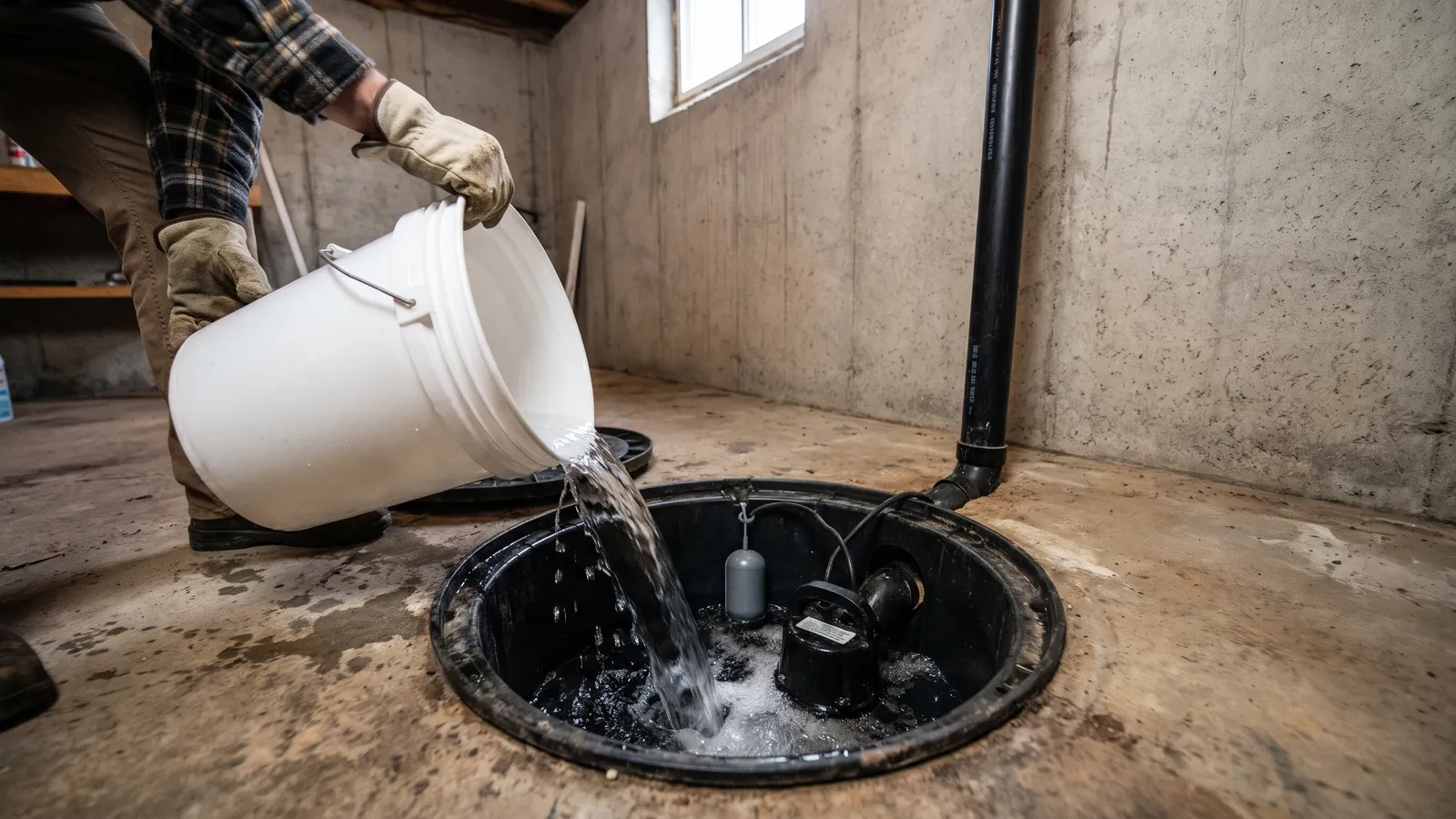
The bucket test
- Remove the lid and look for debris, gravel or a float tangled against the basin wall.
- Slowly pour a bucket of water into the basin.
- The float should rise and the pump start before the water nears the top.
- The pump should empty the basin and shut off cleanly.
- Listen for grinding or rattling, and check that water doesn't flow back into the basin when it stops (a failed check valve).
A seasonal routine
| When | Check |
|---|---|
| Late winter | Bucket test before spring rain and snowmelt; discharge line clear of ice |
| Spring | Watch how often it runs during long rains; backup battery charged |
| Summer | Bucket test before the thunderstorm season |
| Fall | Clear leaves from the discharge outlet; check the extension is in place |
Warning signs
- Pump runs constantly or cycles on and off every few seconds.
- Hums but doesn't pump.
- Loud vibration or rattling.
- Visible rust or a pump that is many years old.
- Backup alarm sounds.
Discharge matters
If the line ends right next to the house, the same water circles back through the clay and the pump keeps moving it. The outlet should be well away from the foundation, on ground that slopes away. In winter, a frozen discharge line can stop a working pump cold.
When a pump fails the test, see sump pump installation or sump pump cost.
Questions
How often should I test the pump?
At least two or three times a year, and before the wet season.
Should I clean the basin?
Yes, when you see sediment or debris. Unplug the pump first.
More reading: all costs and guides · FAQ